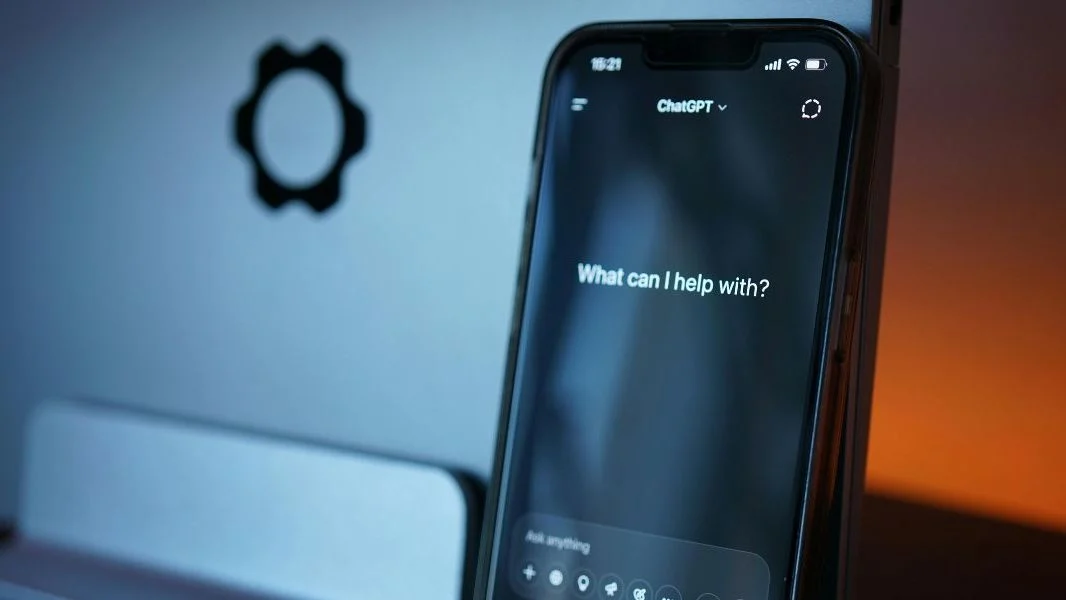
Suppose a company asks the security team to approve an AI assistant for everyday deployment: it might have a slick website from an AI company touting strong privacy controls, but who knows how long it keeps employees’ prompts, whether it uploads or records files, or who can access saved conversations.
That information exists somewhere in privacy policies, DPAs, KB articles, app settings, but may be hard to find and may differ between consumer and enterprise editions.
Once security teams understand this data lifecycle, they can integrate AI into their security strategies.
Understanding the AI Data Lifecycle
An AI’s limitations. Every communication with the AI may include prompts, uploaded files, accumulated history, account IDs, timestamps, IP addresses, and device information.

This information may pass through several storage and processing layers:
- Interview history: the stored chat history the employee sees when they return to the assistant.
- Operational logs: are produced on the provider side for troubleshooting, security analysis, diagnostics, and service management.
- Abuse and security monitoring: Data be examined alone or, under certain conditions, by dedicated staff to detect abuse or security issues.
- Model update data: Data that may be kept or referenced to optimize and improve AI models, based on the provider’s terms of use and preferences.
- Third-party sub-processors: Third-party companies that provide support for hosting, analytics help, and similar support services. A sub-processor is a processor other than the processor providing the services to the customer that processes data representing the processor.
- Choose keep: copies of the conversation may still been in your backups cache, downloaded files, and synced devices, even though the surface was deleted.
You will then know where the data is for each tier and who owns it, so you can protect it.
Five Important Distinctions
Security teams should not treat multiple, separate privacy claims as interchangeable.
- Retention versus training: Retention is how long information is kept. Training is whether it is used to train or improve a model. The provider may also state that they won’t use your customer conversations for training, but they will keep them for operational or security reasons.
- Message and video history: if you delete a chat or a message (even an easily findable chat), it will still be present among other logs and backups we keep for legal and security purposes.
- Encryption v zero-access encryption: Encrypted data can’t be accessed while in motion or at rest. Zero-access encryption means your provider can’t access a decrypted copy of your data in its architecture.
- Deleted versus entirely erased: Deleting a chat in the account interface will not always ensure copies are gone. Backup systems and logs, plus legal-hold requirements, can mean deletion takes longer.
- Consumer vs. business-level plans: Business-level plans may offer different contractual protections, admin controls, retention, and auditing capabilities. Never assume consumer-level privacy controls are the same in business-level plans.

Why Retention Matters to Security Teams
Workers might unknowingly reveal extremely sensitive proprietary data to AI assistants.
Common examples include:
- Source code / configuration files / API keys / auth tokens.
- Updates on incidents reported, details of vulnerabilities and internal security audits.
- Records of Customers, Personnel, and personally identifiable information.
- Agreements, legal letters, and private business policies.
- Official data and non-published research.
Pasted credentials could still appear in chat logs (if chat history retained) or system logs. Same for incident info (if contractual confidentiality provisions, legal hold, or investigation of stated accusations).
Article 5 of the GDPR sets out principles for processing personal data, including data minimization and data retention. Article 28 also requires contractual obligations with processors and sub-processors. Security and legal teams should assess how these obligations affect them.
How to Assess an AI Assistant Before Approval
To be exact, security teams should inquire about the provider’s claims and cross-check them in their contract and technical documentation.
Provider Assessment Checklist
1. What is recorded? Determine what is recorded, like the question prompt any incoming attachments, metadata the IP address, and conversation context, and how long.
2. About chat history? You may wonder if your chats are stored, how they are stored, how they are protected, and whether your users or administrators can delete them.
3. Locked content access– do you need to know if employees, contractors, support, teams, or third parties have access to the data stored?
4. How is my content used to train the model? See whether you’re asked to use your prompts and files to help improve our models for safety, or for human review.
5. Is information deletable? Ask about the retention period, backup retention, and whether you can request deletion of accounts, logs, and any stored files.
6. Where is information processed? Data residency refers to the geographical location where information is stored, while data processing may also occur in other jurisdictions. Ask about both.
7. Which sub-processors are you using? Request list of sub-processors currently engaged, state the purpose of the use of sub-processors and whether international data transfers take place.
8. Third-Party review: is there any third-party verification? Find security certificates, audit reports, penetration tests, transparency reports, and the like.
9. What happens when I cancel? Conditions under which data may be returned or deleted, copies maintained, how long residual copies of data are kept, how deletion can be shown to have occurred.
Available documentation is the privacy policy, DPA sub-processor register, whitepaper on security, retention schedule, incident response policy, independent audit reports.

Another perspective on AI governance, privacy, and third-party risk can be found in the NIST Generative AI Risk Management Profile. If your organization is in scope for European data protection laws, also review the official GDPR text, more exactly its storage limitation and processor relationships sections.
Establishing Internal AI Controls
Provider guarantees are merely one aspect of the decision. It also recommends implementing internal policies that outline acceptable employee conduct.
Draft an overall approved list of tools for any AI assistants, supported account types, business owners, and review deadlines. Establish data classification expectations at each site in training so users know what information they can enter into AI. Do not provide credentials, sensitive customer info, source code, or only partial legal info.
Technical safeguards can reinforce these rules:
- Use DLP controls to discover sensitive data before submission.
- Implement browser controls to block access to unapproved AI services.
- Keep uploads and links to other resources to a minimum, if relevant.
- Provide guidelines for temporary chat, deletion of messages, and exposure of credentials.
- Examine the access logs for unexplained behavioral trends.
Revisit the options available for design. Certain tools were made with privacy and minimal logging in mind; teams reviewing a ChatGPT alternative could look European built and hosted, with zero-access encrypted chat history, no logs of chats, and no training on user conversations. Again, teams should cross-reference these claims with the provider’s current documentation, contractual terms, and data processing terms rather than taking such marketing boilerplate at face value.
Security teams can also review the AI security speakers directory and the cloud security conference schedule for industry-focused sessions.
Final Review Checklist
Before approving an AI assistant, confirm that:
- Storage durations are recorded against all categories of data.
- Logging is decoupled from model-training policies.
- Familiarity with access rights and the process of deletions.
- Data locations and sub-processors have been checked.
- Internal usage rules and monitoring controls are applied.
- The rating includes the date it was carried out and the responsible owner.
The policies for an AI vendor, the way their product works, and the terms of the agreement may evolve. Security teams should date each assessment and repeat it regularly after any changes to subscriptions, integrations, or data processing.
The key takeaway: Data retention and logging represent the most tangible aspect of an AI assistant’s risk landscape. Asking the right questions, considering the documentation, and applying inhouse controls enable a confident go/no-go decision regardless of the future of any global standard of AI safety.